
Starting a Community Archive
Introduction
This toolkit is an introduction to starting a community archive. It also includes examples of pre-existing community museums and a list of additional resources. Before reading this guide, check out the What are Archives and Museums to familiarize yourself with the basics of archives.
Note: Archival standards and procedures are constantly changing. This guide is meant to be an introduction, not a definitive authority. For the most up-to-date information, contact your local archives association.
Should you start an archive?
Starting an archive is a large undertaking and requires continuous upkeep, so your organization will need skilled staff, like someone to administer records and conduct archival processes. Since your repository will likely be the place where many of the documents are kept for the foreseeable future, it is important to plan for the future of your archive. Starting an archive is not a one-time project, but a permanent institution that will require ongoing upkeep.
Things to consider:
- What are your archival needs?
- How will you fund your archive?
- Who will provide access to and maintain the archive? Volunteers? Paid staff?
- Can you secure a space for the archive?
Steps to Creating a Community Archive
- Consider your purpose
- Take some time to reflect on your reasons for establishing an archive.
- Secure a space
- Consider environmental goals for an archive.
- See Chapter 6 (p. 81) in A Manual for Small Archives
- Create a mandate:
- A mandate is one of the most important features of an archive. It is a document that outlines the purpose of the archive and sets rigid guidelines of what the archive will and won’t accept.
- Sample archival mandates:
- The Banff Centre Archives Mandate
- Library and Archives Canada Mandate
- Secure funding
- Decide how you will fund your archive and ensure that the archival mandate has been approved by the sponsoring body.
- Acquire Materials
- Begin actively gathering records from and for the community you seek to serve.
- Always document new acquisitions through a Deed of Gift (further details in the next section.
- You do not need to acquire everything that is donated to you. Before accepting material you must determine if it fits your mandate and if it is worth bringing into your archive; this is referred to as Appraisal. Further details on the process of appraisal are outlined in the “Ongoing Considerations” section below.
- Gain control of materials
- This is a key step and must not be overlooked! Once materials are acquired, archives should work to achieve legal, physical, and intellectual control over their materials. When materials are donated or acquired by an archive, they become the property of the archive.
- Legal: Legal control means that the archive has documented the change of hands through aDeed of Gift, which is a formal agreement between the archive and the donor that transfers legal ownership of the material.
- More on Deed of Gift: Society of American Archivists – A Guide to Deeds of Gifts
- Example Deed of Gift: Brock University – Deed of Gift Agreement
- Physical: Physical control over archival holdings refers to safe and secure storage of materials.
- Intellectual: Intellectual control means that you as an archive have knowledge of the materials in your archive and where it came from.
- Make Materials Accessible
- Materials need to be made accessible by the creators, donors, and the general public. This can be done in a number of ways:
- Creating an archival finding aid.
- Creating a searchable database. This can be as simple as an excel spreadsheet.
Ongoing Considerations
Collections Management
Appraisal
Things to consider when conducting appraisal:
- Administrative value: Are the materials important for administration, financial, or legal activities of the creator? If so they should not be destroyed.
- Quantity: Is it a reasonable amount of material for your archive to maintain?
- Uniqueness: Is the material one of a kind? Does your archive already have similar materials?
- Physical quality: Is the material in good condition? Items that are deteriorating might be more difficult to maintain and not worth the effort.
- Use: What are future uses of the material?
- Further resources on appraisal:
- The National Archives – What is appraisal?
- Video on the basics of archival appraisal
Organizing Archival Material
Archives are arranged by specific principles. When possible, archival material is arranged in the order in which it was originally created and maintained. This is referred to as “original order” and helps contextualize the materials. Archives are arranged according to the following levels of arrangement:
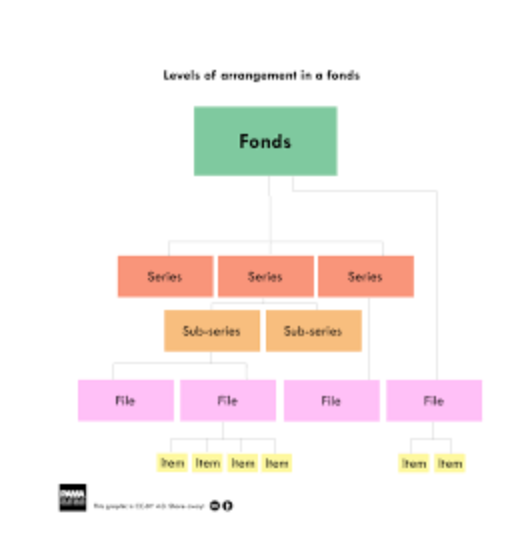
Fonds: whole collection created by one creator, this could be an individual or corporate body
Series: grouping of records according to their use, type, or subject (and sub-series if necessary)
File: folder of items treated as one unit relating to same series
Item: individual record
Description
In order to be discoverable, archives must be described. Description offers the user of the archive an overview of the content and context of the material. Archival materials should be described from the general to the specific. First, the entire collection as a whole (the fonds) must be described. This can be done with as much specificity as the archive can manage. Once the fonds is described as a whole, separate series can be described, then files, and finally items. It is more rare for archives to describe materials at the file or item level as these endeavors require a lot of time.
- For more information on archival description see A Manual for Small Archives Chapter 5, “Describing Archival Material” (page 56)
Examples of Pre-Existing Community Archives
Slovenian Canadian Historical Society
- Website
- “Building Community Through Archives: A Report on the Activities of The Canadian Slovenian Historical Society” By Anne Urbančič, Article Link: CSHS Urbancic.pdf
- “Our Story” Newsletter outlines their journey to creating a community archive, link:Vol. 13 No. 2 Summer 2023 (2).pdf
Ontario Jewish Archives
The ArQuives: Canada’s LGBTQ2+ Archives
- Website
- About the organization includes reports, policies, and information about archives.
Don’t get discouraged!
Some of these steps may seem beyond your reach. Yes, starting an archive is a big endeavor but you do not necessarily need to undertake each of the suggestions outlined in this guideline. Each archive is unique in its material, resources, and goals. You likely cannot do it all. As long as you are working to preserve materials and make them discoverable in some capacity you are making a difference.
Additional Resources
Archival Resources
- Archives of Ontario
- What does an archivist do?
- This “Manual for Small Archives” guide offers an excellent overview of starting a small archive: Manual for Small Archives_Sept 2021.pdf
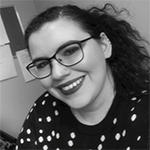
 Carrie-Ann Smith est titulaire d’une maîtrise en bibliothéconomie et sciences de l’information de l’Université Dalhousie à Halifax. Elle est devenue membre de la Pier 21 Society à l’été 1998 et occupe actuellement le poste de Device-President, Public Engagement Officer au Musée canadien de l’immigration du Quai 21. Mme Smith (ne vous fiez pas à son nom de famille) est un descendant de Federico et Mabli Artuso de San Martino di Lupari; elle a écrit une histoire sur sa vie de jeune italo-canadienne grandissant à Sault Ste. Marie, Ontario, paru dans Mamma Mia: Good Italian Girls Talk Back (ECW Press). L’objectif de Mme Smith de travailler au Musée, qui est d’aider à recueillir, préserver et faire connaître les souvenirs des immigrants qui sont venus au Canada, la motive également à contribuer au travail de l’ICAP.
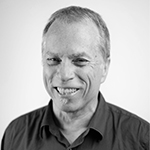
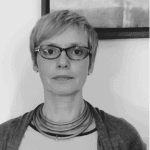 Sandra Parmegiani enseigne les études italiennes et européennes à l’Université de Guelph et a été présidente de la Société canadienne d’études italiennes (juin 2014 à juin 2017). Dans le passé, elle a enseigné la littérature et la langue italiennes au Trinity College de Dublin (Irlande) et à l’Université de Western Ontario. Ses recherches portent sur la littérature et la culture italiennes du XVIIIe siècle et de la période contemporaine. Depuis 2013, grâce à une bourse obtenue de Mitacs, elle encadre des travaux postdoctoraux sur la cartographie des ressources culturelles immatérielles par l’analyse de la culture de la lecture.
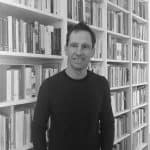
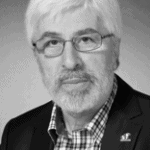 Gabriel Niccoli est titulaire d’un doctorat. en littérature comparée de l’Université de la Colombie-Britannique et professeur émérite d’études médiévales et d’études françaises et italiennes à l’Université St. Jerome, affiliée à l’Université de Waterloo. Il y a dirigé le département pendant dix-sept ans et a reçu le Distinguished Professor Award. Il a publié de nombreux ouvrages sur la théorie dramatique italienne et française des XVIe et XVIIe siècles et sur les écrivaines italiennes de la Renaissance. Il a édité un volume intitulé Ricordi et publié des essais sur des études liées à l’immigration italo-canadienne. Il édite actuellement un recueil d’essais critiques sur le thème du nostos, ou du retour à la maison après un long voyage. Le professeur Niccoli a reçu des honneurs en Italie et au Canada et a été vice-consul honoraire d’Italie en Ontario. Il est très actif comme animateur et promoteur culturel au sein des communautés italo-canadiennes de la côte ouest et de l’Ontario.
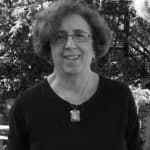 Nancy Marrelli est archiviste émérite à l’Université Concordia et archiviste du nouveau Centre d’archives de la Communauté italo-canadienne du Québec. Elle est co-éditrice de Vehicule Press, une maison d’édition montréalaise. Elle participe activement aux activités professionnelles d’archivage au Canada, aux États-Unis et à l’international; ses travaux et publications en français et en anglais portent sur le droit d’auteur, la conservation, le patrimoine du monde de la danse, divers aspects de l’histoire de Montréal et les archives audiovisuelles. Elle a animé de nombreux ateliers et conférences et anime actuellement une série de webinaires en français et en anglais sur le droit d’auteur pour le Conseil canadien des archives. Mme Marrelli travaille également dans les domaines de la création littéraire et de l’édition.
 Michael Iannozzi est diplômé de l’Université Western. Ses recherches portent sur la documentation linguistique, la sociolinguistique et la sensibilisation du public. Il s’intéresse particulièrement au dialecte anglais du sud-ouest de l’Ontario et aux dialectes italiens des communautés italiennes du Canada. M. Iannozzi travaille avec Caroline Di Cocco pour documenter les histoires de vie de la communauté italo-canadienne de Sarnia, notamment par la numérisation de vieilles photos et bandes, et pour concevoir un site Web pour promouvoir ces morceaux uniques d’histoire. du Canada, un projet soutenu par les archives de Sarnia-Lambton. M. Iannozzi s’identifie autant à un Canadien d’origine italienne qu’à un Canadien d’une petite ville. Ses grands-parents paternels, nés à Castelliri (Frosinone) ont immigré à Sarnia en 1960. Ses grands-parents maternels, agriculteurs depuis 62 ans, fêteront bientôt leur 70e anniversaire de mariage. C’est un honneur pour M. Iannozzi de documenter et de préserver les histoires des Italo-Canadiens.
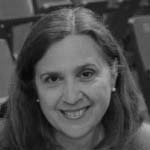 Antonella Fanella est née à Milan, en Italie, et a grandi à Calgary, en Alberta. Elle est titulaire d’un baccalauréat ès arts et d’une maîtrise ès arts en histoire de l’Université de Calgary. Pendant 25 ans, elle a été archiviste pour le Glenbow Museum et des établissements postsecondaires. Elle est actuellement consultante en archivistique spécialisée dans l’évaluation des archives, le développement des collections et la migration des documents électroniques. Mme Fanella a publié des ouvrages historiques, notamment With Heart and Soul: Calgary’s Italian Community et de nombreux articles.
 Cristina Caracchini est titulaire d’une maîtrise en littérature italienne de l’Université de Florence et d’un doctorat en littérature comparée de l’Université de Montréal. Elle est professeure agrégée de littérature italienne et comparée à l’Université Western Ontario (UWO) et vice-présidente de l’Association canadienne d’études italiennes (ACEI). Elle est l’auteur de Cognizione e discorso poetico (2009) et de plusieurs articles sur les écrivains italo-canadiens, et co-éditeur, avec Enrico Minardi, du volume Ilpensiero della poesia (2017). Avec des collègues du programme d’études italiennes, Mme Caracchini a organisé des événements communautaires parrainés par l’UWO et la communauté italo-canadienne à Londres, y compris la conférence nationale ICAP en 2016.
 Secretario
 Dr. Pietro Pirani is an Assistant Professor in the Department of Languages and
  Maria Stella Paola, a recent retiree with 35
 Co-Chair