

By Dr. Laura Sanchini, Manager of Research, Contemporary Canada (Acting), Canadian Museum of History
Even the most seasoned oral historian will occasionally come across a problem when conducting oral interviews. The best way to resolve any issues that may come your way is to anticipate and prepare for them. Below is a short guide on how to handle some of the most common issues you may face when conducting oral interviews.
What do I do if…
…my interviewee rescinds their consent?
The most important ethical consideration in oral history (and in any research conducted “with human participants”) is free and informed consent. No one can give their consent if they do not know what they are consenting to. Informed consent includes giving participants a plain language description of the project/interview goals; clearly described rights & responsibilities of interviewers, interviewee; the right to anonymity (i.e.: pseudonyms, hiding identifying characteristics etc.); accessibility of records- i.e.: records will exist and/be archived; the right to refuse participation at any time; and the right to withdraw at any time with no fear of consequences. Sometimes interview participants change their mind and no longer want to be part of your project. If this happens, you should return to them the original (and any copies) of the interview, the release/consent form and any transcripts or indexes.
…my participant is emotionally distressed?
Oral history interviews can sometimes bring up strong emotions in interviewees. This can result in emotional distress, or crisis. Before the interview begins, let the interviewee know that they can take a break anytime they wish, and place a box of Kleenex and water close to them. Always remember to highlight to the participant that they lead the decision-making around the interview process; that they are in control of the topics discussed in the interview and that they can stop and walk away at any point. If a participant begins to cry you can gently ask them if they would like a break. Some people will want a bit of time to collect themselves, others will prefer to keep going. Honour their preference. If someone is showing signs of an emotional crisis (crying increasing in intensity, mounting anger etc) it is best to stop the interview. You can ask them if there is anyone to call so they don’t have to drive home alone. Ask orienting questions (ie: what date is it today? What city are we in?), repeat that they are safe and where they are to help ground them. On the other hand, sometimes things shared with us during oral history interviews can deeply affect us. Remember to take care of your own emotional and mental well-being. Speak with a colleague, friend, or counsellor about what you are feeling so you can work on processing the stories you heard. It can be challenging to hold so many peoples’ stories within you, especially when they deal with difficult subject matters.
…my equipment fails?
Equipment will fail, batteries will die. The best way to troubleshoot this is to arrive prepared with contingencies. Always have extra batteries, microphones, SD cards on hand for interviews. Try out your equipment before an interview to make sure everything is working as it should. If there is a malfunction and postponing the interview is not possible, the simplest thing to do is to let the participant know that you will be taking copious notes while they talk. Giving them a head’s up that you will be taking notes is so that they don’t think you are being rude or ignoring them. Writing detailed notes during an interview is difficult because it takes you out of being able to actively listen, but writing in note-form or shorthand can help. You can even resort to using your phone to record but be aware that the format phones tend to record in are not considered archival quality since they are extremely compressed.
…there is a clash or conflict of personalities?
As oral historians, our role is to support the interviewee and create space for them to share their story. This kind of work does sometimes put you in close proximity to people whose personalities and/or beliefs may clash with yours. It’s important to remember a few key things: 1) the interview is not about you, so try as much as possible to focus on the interviewee. Everyone has a story to tell and it’s your job to help them tell it. 2) if someone shares beliefs that you don’t agree with, this is not the time to debate them. You don’t need to agree with or even like their opinions. You don’t need to dwell on these beliefs during the interview either. Simply ask a question to redirect them to another topic. 3) if their beliefs make you feel unsafe, you can try to steer the interview away from this topic or if that does not work, end the interview. Your safety (mental and physical) is just as important as that of the interviewee.
…my interviewee who won’t let me ask any questions?
Some people have a very defined narrative arc of their story and they do not deviate from it. You will recognise these types of interviews when you ask the first question and the interviewee speaks for 10+ minutes straight without stopping. These types of interviews can be a challenge because you aren’t easily able to ask follow-up questions or shape the interview much. In these scenarios, the simplest way is to allow them to tell you their story in the way they want to tell it, and then once they are done, go back and ask specific follow up questions (“I’d like to go back to when you spoke about XYZ, can you tell me a bit more about …”). Try to avoid interrupting them to ask questions as it can set up a negative dynamic between you.
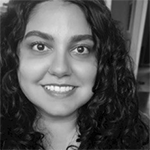
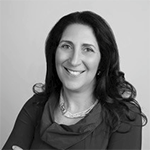
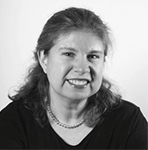
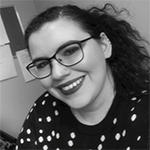
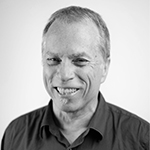
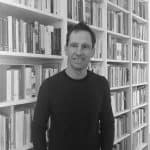
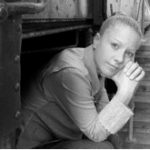 Carrie-Ann Smith est titulaire d’une maîtrise en bibliothéconomie et sciences de l’information de l’Université Dalhousie à Halifax. Elle est devenue membre de la Pier 21 Society à l’été 1998 et occupe actuellement le poste de Device-President, Public Engagement Officer au Musée canadien de l’immigration du Quai 21. Mme Smith (ne vous fiez pas à son nom de famille) est un descendant de Federico et Mabli Artuso de San Martino di Lupari; elle a écrit une histoire sur sa vie de jeune italo-canadienne grandissant à Sault Ste. Marie, Ontario, paru dans Mamma Mia: Good Italian Girls Talk Back (ECW Press). L’objectif de Mme Smith de travailler au Musée, qui est d’aider à recueillir, préserver et faire connaître les souvenirs des immigrants qui sont venus au Canada, la motive également à contribuer au travail de l’ICAP.
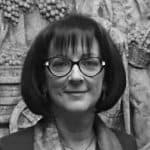
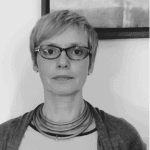 Sandra Parmegiani enseigne les études italiennes et européennes à l’Université de Guelph et a été présidente de la Société canadienne d’études italiennes (juin 2014 à juin 2017). Dans le passé, elle a enseigné la littérature et la langue italiennes au Trinity College de Dublin (Irlande) et à l’Université de Western Ontario. Ses recherches portent sur la littérature et la culture italiennes du XVIIIe siècle et de la période contemporaine. Depuis 2013, grâce à une bourse obtenue de Mitacs, elle encadre des travaux postdoctoraux sur la cartographie des ressources culturelles immatérielles par l’analyse de la culture de la lecture.
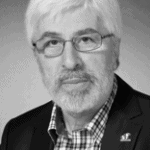 Gabriel Niccoli est titulaire d’un doctorat. en littérature comparée de l’Université de la Colombie-Britannique et professeur émérite d’études médiévales et d’études françaises et italiennes à l’Université St. Jerome, affiliée à l’Université de Waterloo. Il y a dirigé le département pendant dix-sept ans et a reçu le Distinguished Professor Award. Il a publié de nombreux ouvrages sur la théorie dramatique italienne et française des XVIe et XVIIe siècles et sur les écrivaines italiennes de la Renaissance. Il a édité un volume intitulé Ricordi et publié des essais sur des études liées à l’immigration italo-canadienne. Il édite actuellement un recueil d’essais critiques sur le thème du nostos, ou du retour à la maison après un long voyage. Le professeur Niccoli a reçu des honneurs en Italie et au Canada et a été vice-consul honoraire d’Italie en Ontario. Il est très actif comme animateur et promoteur culturel au sein des communautés italo-canadiennes de la côte ouest et de l’Ontario.
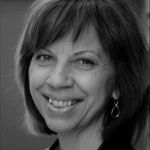
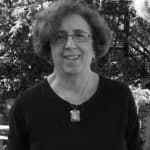 Nancy Marrelli est archiviste émérite à l’Université Concordia et archiviste du nouveau Centre d’archives de la Communauté italo-canadienne du Québec. Elle est co-éditrice de Vehicule Press, une maison d’édition montréalaise. Elle participe activement aux activités professionnelles d’archivage au Canada, aux États-Unis et à l’international; ses travaux et publications en français et en anglais portent sur le droit d’auteur, la conservation, le patrimoine du monde de la danse, divers aspects de l’histoire de Montréal et les archives audiovisuelles. Elle a animé de nombreux ateliers et conférences et anime actuellement une série de webinaires en français et en anglais sur le droit d’auteur pour le Conseil canadien des archives. Mme Marrelli travaille également dans les domaines de la création littéraire et de l’édition.
 Michael Iannozzi est diplômé de l’Université Western. Ses recherches portent sur la documentation linguistique, la sociolinguistique et la sensibilisation du public. Il s’intéresse particulièrement au dialecte anglais du sud-ouest de l’Ontario et aux dialectes italiens des communautés italiennes du Canada. M. Iannozzi travaille avec Caroline Di Cocco pour documenter les histoires de vie de la communauté italo-canadienne de Sarnia, notamment par la numérisation de vieilles photos et bandes, et pour concevoir un site Web pour promouvoir ces morceaux uniques d’histoire. du Canada, un projet soutenu par les archives de Sarnia-Lambton. M. Iannozzi s’identifie autant à un Canadien d’origine italienne qu’à un Canadien d’une petite ville. Ses grands-parents paternels, nés à Castelliri (Frosinone) ont immigré à Sarnia en 1960. Ses grands-parents maternels, agriculteurs depuis 62 ans, fêteront bientôt leur 70e anniversaire de mariage. C’est un honneur pour M. Iannozzi de documenter et de préserver les histoires des Italo-Canadiens.
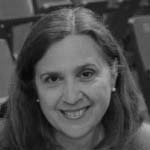 Antonella Fanella est née à Milan, en Italie, et a grandi à Calgary, en Alberta. Elle est titulaire d’un baccalauréat ès arts et d’une maîtrise ès arts en histoire de l’Université de Calgary. Pendant 25 ans, elle a été archiviste pour le Glenbow Museum et des établissements postsecondaires. Elle est actuellement consultante en archivistique spécialisée dans l’évaluation des archives, le développement des collections et la migration des documents électroniques. Mme Fanella a publié des ouvrages historiques, notamment With Heart and Soul: Calgary’s Italian Community et de nombreux articles.
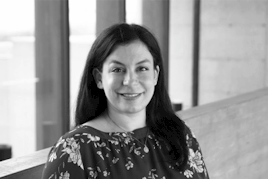
 Cristina Caracchini est titulaire d’une maîtrise en littérature italienne de l’Université de Florence et d’un doctorat en littérature comparée de l’Université de Montréal. Elle est professeure agrégée de littérature italienne et comparée à l’Université Western Ontario (UWO) et vice-présidente de l’Association canadienne d’études italiennes (ACEI). Elle est l’auteur de Cognizione e discorso poetico (2009) et de plusieurs articles sur les écrivains italo-canadiens, et co-éditeur, avec Enrico Minardi, du volume Ilpensiero della poesia (2017). Avec des collègues du programme d’études italiennes, Mme Caracchini a organisé des événements communautaires parrainés par l’UWO et la communauté italo-canadienne à Londres, y compris la conférence nationale ICAP en 2016.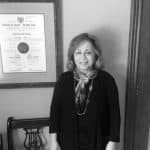

 Secretario
 Dr. Pietro Pirani is an Assistant Professor in the Department of Languages and
  Maria Stella Paola, a recent retiree with 35
 Co-Chair