
University of Calgary and Glenbow announce historic initiative
Glenbow Western Research Centre at the University of Calgary will increase access, teaching and research opportunities for students, academics and the public

The Glenbow Western Research Centre at the University of Calgary will be housed in the Taylor Family Digital Library. University of Calgary photo
The Glenbow Western Research Centre at the University of Calgary will be housed in the Taylor Family Digital Library. University of Calgary photo
By University Relations Staff
November 14, 2018
Two of western Canada’s leading learning institutions are creating an innovative approach to community-based research: the Glenbow Western Research Centre at the University of Calgary. Over the next two years, Glenbow’s Library and Archives will be relocated to the University of Calgary to provide the widest possible access to this remarkable collection.
“This initiative will provide new opportunities for students, scholars and the public to access the historic Glenbow collections by housing them within our university’s archives,” said UCalgary President Elizabeth Cannon. “The Glenbow collections will elevate the University of Calgary’s Libraries and Cultural Resources, providing enhanced engagement with teaching, research and public interest in Western Canada.”
This move to the university, for a 99-year period, closely aligns Glenbow’s collections with teaching and learning, and research interests at UCalgary. The relocation gives students easy access to another world-class collection and will benefit students in a wide range of disciplines including: local, regional and provincial history; social studies; cultural and social history; religious studies; geography; political science; military history and artifacts; and agriculture.
“We are excited about this collaboration and the prominence the university is placing on these important research materials,” says Glenbow Board Chair Irfhan Rawji. “The university will be able to ensure greater public and academic access than Glenbow is currently able to provide. By leveraging this new space at the university to feature part of Glenbow’s collection, we can focus on ensuring other impressive aspects of our collection – such as our vast array of contemporary and historical art – have more room to be displayed in our building for the public to enjoy.”
The collections include provincially owned archives currently held by Glenbow and stewarded in accordance with existing standards that Glenbow is responsible for providing under the Glenbow-Alberta Institute Act and its service agreement with the Province. The Province of Alberta has approved the relocation agreement.
“The Glenbow Western Research Centre will ensure the long-term conservation of – and expanded public access to – these valuable records that help tell our shared stories and history,” said Ricardo Miranda, minister of culture and tourism for the Government of Alberta. “I support this initiative because it supports our government’s efforts to further enhance Alberta’s archives.”
The addition of the Glenbow collections to the University of Calgary is made possible through the generous support of the Calgary community. Bill Siebens and family are providing support integral to the relocation. Other donors, passionate about preserving Western Canadian history and culture, may contribute to support the relocation of the collections to the university and their ongoing stewardship.
“We were inspired to make this significant gift as we believe it is critical to preserve the valuable records and artifacts that illustrate who we are as Albertans; who we are as Western Canadians. With society moving at such an incredible pace, and with technology changing before our eyes, we felt a responsibility to preserve that which came before us so that future generations can explore, and learn from, the rich lessons of the past,” said Bill Siebens. “The cultural resources contained in the library and archives are treasured stories of families, of commerce, of struggle – all woven in with the innovation and progress that brought us to where we are today. We are proud that the centre will serve as an invaluable resource for students, faculty, researchers and the general public. We know that its vast archival holdings will help inform future decision-making related to all facets of community life.”
The Glenbow Western Research Centre will be located in the Taylor Family Digital Library and the collections will be stewarded by experts in UCalgary’s Libraries and Cultural Resources. The transition will take place over the next two years, beginning in January 2019, with the new location expected to open in the fall of 2019. Details on the relocation will be available atucalgary.ca/glenbow to ensure smooth transition and clear access to materials.
The Siebens family contribution is part of the university’s ongoing fundraising campaign, Energize: The Campaign for Eyes High. The campaign is currently at $1.126 billion towards its overall goal of $1.3 billion.
About Energize: The Campaign for Eyes High
Energize: The Campaign for Eyes High is the University of Calgary’s most ambitious fundraising campaign in its history. Funds raised through the campaign will support student experiences, research outcomes and community connections. Together we are fueling transformational change for the University of Calgary, our city, and beyond — inspiring discovery, creativity and innovation for generations to come. Formally launched in April 2016, the campaign is more than two thirds to its overall goal of $1.3 billion.




 Carrie-Ann Smith est titulaire d’une maîtrise en bibliothéconomie et sciences de l’information de l’Université Dalhousie à Halifax. Elle est devenue membre de la Pier 21 Society à l’été 1998 et occupe actuellement le poste de Device-President, Public Engagement Officer au Musée canadien de l’immigration du Quai 21. Mme Smith (ne vous fiez pas à son nom de famille) est un descendant de Federico et Mabli Artuso de San Martino di Lupari; elle a écrit une histoire sur sa vie de jeune italo-canadienne grandissant à Sault Ste. Marie, Ontario, paru dans Mamma Mia: Good Italian Girls Talk Back (ECW Press). L’objectif de Mme Smith de travailler au Musée, qui est d’aider à recueillir, préserver et faire connaître les souvenirs des immigrants qui sont venus au Canada, la motive également à contribuer au travail de l’ICAP.
 Sandra Parmegiani enseigne les études italiennes et européennes à l’Université de Guelph et a été présidente de la Société canadienne d’études italiennes (juin 2014 à juin 2017). Dans le passé, elle a enseigné la littérature et la langue italiennes au Trinity College de Dublin (Irlande) et à l’Université de Western Ontario. Ses recherches portent sur la littérature et la culture italiennes du XVIIIe siècle et de la période contemporaine. Depuis 2013, grâce à une bourse obtenue de Mitacs, elle encadre des travaux postdoctoraux sur la cartographie des ressources culturelles immatérielles par l’analyse de la culture de la lecture.
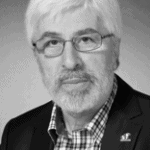 Gabriel Niccoli est titulaire d’un doctorat. en littérature comparée de l’Université de la Colombie-Britannique et professeur émérite d’études médiévales et d’études françaises et italiennes à l’Université St. Jerome, affiliée à l’Université de Waterloo. Il y a dirigé le département pendant dix-sept ans et a reçu le Distinguished Professor Award. Il a publié de nombreux ouvrages sur la théorie dramatique italienne et française des XVIe et XVIIe siècles et sur les écrivaines italiennes de la Renaissance. Il a édité un volume intitulé Ricordi et publié des essais sur des études liées à l’immigration italo-canadienne. Il édite actuellement un recueil d’essais critiques sur le thème du nostos, ou du retour à la maison après un long voyage. Le professeur Niccoli a reçu des honneurs en Italie et au Canada et a été vice-consul honoraire d’Italie en Ontario. Il est très actif comme animateur et promoteur culturel au sein des communautés italo-canadiennes de la côte ouest et de l’Ontario.
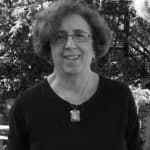 Nancy Marrelli est archiviste émérite à l’Université Concordia et archiviste du nouveau Centre d’archives de la Communauté italo-canadienne du Québec. Elle est co-éditrice de Vehicule Press, une maison d’édition montréalaise. Elle participe activement aux activités professionnelles d’archivage au Canada, aux États-Unis et à l’international; ses travaux et publications en français et en anglais portent sur le droit d’auteur, la conservation, le patrimoine du monde de la danse, divers aspects de l’histoire de Montréal et les archives audiovisuelles. Elle a animé de nombreux ateliers et conférences et anime actuellement une série de webinaires en français et en anglais sur le droit d’auteur pour le Conseil canadien des archives. Mme Marrelli travaille également dans les domaines de la création littéraire et de l’édition.
 Michael Iannozzi est diplômé de l’Université Western. Ses recherches portent sur la documentation linguistique, la sociolinguistique et la sensibilisation du public. Il s’intéresse particulièrement au dialecte anglais du sud-ouest de l’Ontario et aux dialectes italiens des communautés italiennes du Canada. M. Iannozzi travaille avec Caroline Di Cocco pour documenter les histoires de vie de la communauté italo-canadienne de Sarnia, notamment par la numérisation de vieilles photos et bandes, et pour concevoir un site Web pour promouvoir ces morceaux uniques d’histoire. du Canada, un projet soutenu par les archives de Sarnia-Lambton. M. Iannozzi s’identifie autant à un Canadien d’origine italienne qu’à un Canadien d’une petite ville. Ses grands-parents paternels, nés à Castelliri (Frosinone) ont immigré à Sarnia en 1960. Ses grands-parents maternels, agriculteurs depuis 62 ans, fêteront bientôt leur 70e anniversaire de mariage. C’est un honneur pour M. Iannozzi de documenter et de préserver les histoires des Italo-Canadiens.
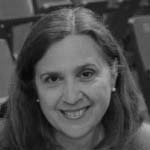 Antonella Fanella est née à Milan, en Italie, et a grandi à Calgary, en Alberta. Elle est titulaire d’un baccalauréat ès arts et d’une maîtrise ès arts en histoire de l’Université de Calgary. Pendant 25 ans, elle a été archiviste pour le Glenbow Museum et des établissements postsecondaires. Elle est actuellement consultante en archivistique spécialisée dans l’évaluation des archives, le développement des collections et la migration des documents électroniques. Mme Fanella a publié des ouvrages historiques, notamment With Heart and Soul: Calgary’s Italian Community et de nombreux articles.
 Cristina Caracchini est titulaire d’une maîtrise en littérature italienne de l’Université de Florence et d’un doctorat en littérature comparée de l’Université de Montréal. Elle est professeure agrégée de littérature italienne et comparée à l’Université Western Ontario (UWO) et vice-présidente de l’Association canadienne d’études italiennes (ACEI). Elle est l’auteur de Cognizione e discorso poetico (2009) et de plusieurs articles sur les écrivains italo-canadiens, et co-éditeur, avec Enrico Minardi, du volume Ilpensiero della poesia (2017). Avec des collègues du programme d’études italiennes, Mme Caracchini a organisé des événements communautaires parrainés par l’UWO et la communauté italo-canadienne à Londres, y compris la conférence nationale ICAP en 2016.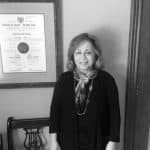

 Secretario
 Dr. Pietro Pirani is an Assistant Professor in the Department of Languages and
  Maria Stella Paola, a recent retiree with 35
 Co-Chair